Last updated November 18, 2026
Free written scope consultation - allowances, timeline, and change-order rules on paper before a single trade is scheduled
The Complete Driveway & Pavers Guide for Spring Valley Homeowners
Most failed paver installations in the Las Vegas Valley aren’t a material problem. They’re a base problem. A homeowner falls for a handsome travertine sample, the pavers arrive, and two summers later the surface is heaving and rocking because nobody dug through the caliche. That hard, cement-like layer under much of Spring Valley sits anywhere from about six to eighteen inches down, and it decides how a driveway should be built long before color or pattern enter the conversation. This guide maps every paver category to the ground conditions we actually work with in Spring Valley, NV, from base prep and soil to HOA palettes, heat, drainage and slope. By the end you’ll know what to ask, what to spec and what to avoid.
Quick Answer
A driveway in Spring Valley should be built on a compacted aggregate base thick enough to clear and replace the caliche layer, not laid over it, with edge restraint and polymeric sand suited to desert heat. Concrete pavers are the budget workhorse, travertine stays cooler underfoot, permeable systems handle intense rain and HOA rules, and porcelain gives the longest color life. The base, not the brick, is what makes it last.
Styles & brands we work with
- Kitchen remodeling
- Bathroom remodeling
- Home additions & ADU
- Roofing
- Windows & doors
- Driveway & pavers
- Fence
Table of Contents
- Why Caliche Depth Dictates Your Base, Not the Spec Sheet
- Concrete, Travertine, Permeable or Porcelain: Which Paver Fits Spring Valley?
- Heat and Reflectance: Why Surface Temperature Matters in a Nevada Summer
- Drainage, Slope and Permeable Pavers Under Clark County Rules
- HOA Palettes and the Brands That Fit Them
- The Full System: Compaction, Edge Restraint and Heat-Rated Sand
- How a Proper Paver Driveway Comes Together, Step by Step
- What Drives Cost on a Spring Valley Paver Driveway
Why Caliche Depth Dictates Your Base, Not the Spec Sheet
Caliche is a naturally cemented layer of calcium carbonate that forms in desert soils, and in Spring Valley it typically turns up somewhere between six and eighteen inches below grade. The depth varies from lot to lot, even between neighboring properties, which is why the first real step on any driveway is finding it. A manufacturer’s spec sheet can tell you the minimum base thickness a paver needs, but it can’t tell you what’s under your particular slab of desert. The soil does that.
Here’s the practical problem. If a crew strips off the old surface and finds caliche at eight inches, they have a decision. They can try to compact over it, which almost never holds because the material below won’t drain or settle evenly. Or they can break it out to the depth the base needs and rebuild from there. The right answer is almost always the second one. Caliche that traps water under a paver field is the single most common reason a driveway heaves, rocks or develops ruts within a couple of summers.
What that means for your project:
- Depth of caliche sets the excavation. If the layer sits shallow, you’re removing more material and adding more aggregate.
- Base thickness is measured in compacted lifts, not one dumped pile. Each lift gets watered and compacted before the next goes down.
- Drainage has to be designed around the soil, not assumed. Caliche doesn’t drain well, so water needs somewhere to go.
- Every lot is different. A Spring Valley property on one street can behave nothing like the next.
This is also the point where homeowners benefit from having a team that can read the ground before quoting. Our technicians have up to 12 years of experience working desert soils, and the first conversation on a driveway is always about what’s under it. When we take on driveway & pavers work, the base discussion comes before the material discussion, every time.
Concrete, Travertine, Permeable or Porcelain: Which Paver Fits Spring Valley?
There’s no single best paver for Spring Valley. There’s a best paver for your driveway, your budget, your HOA and how much barefoot walking you plan to do in July. Each category has real strengths and honest trade-offs, and choosing well means matching the material to the conditions rather than the brochure.
Concrete Pavers
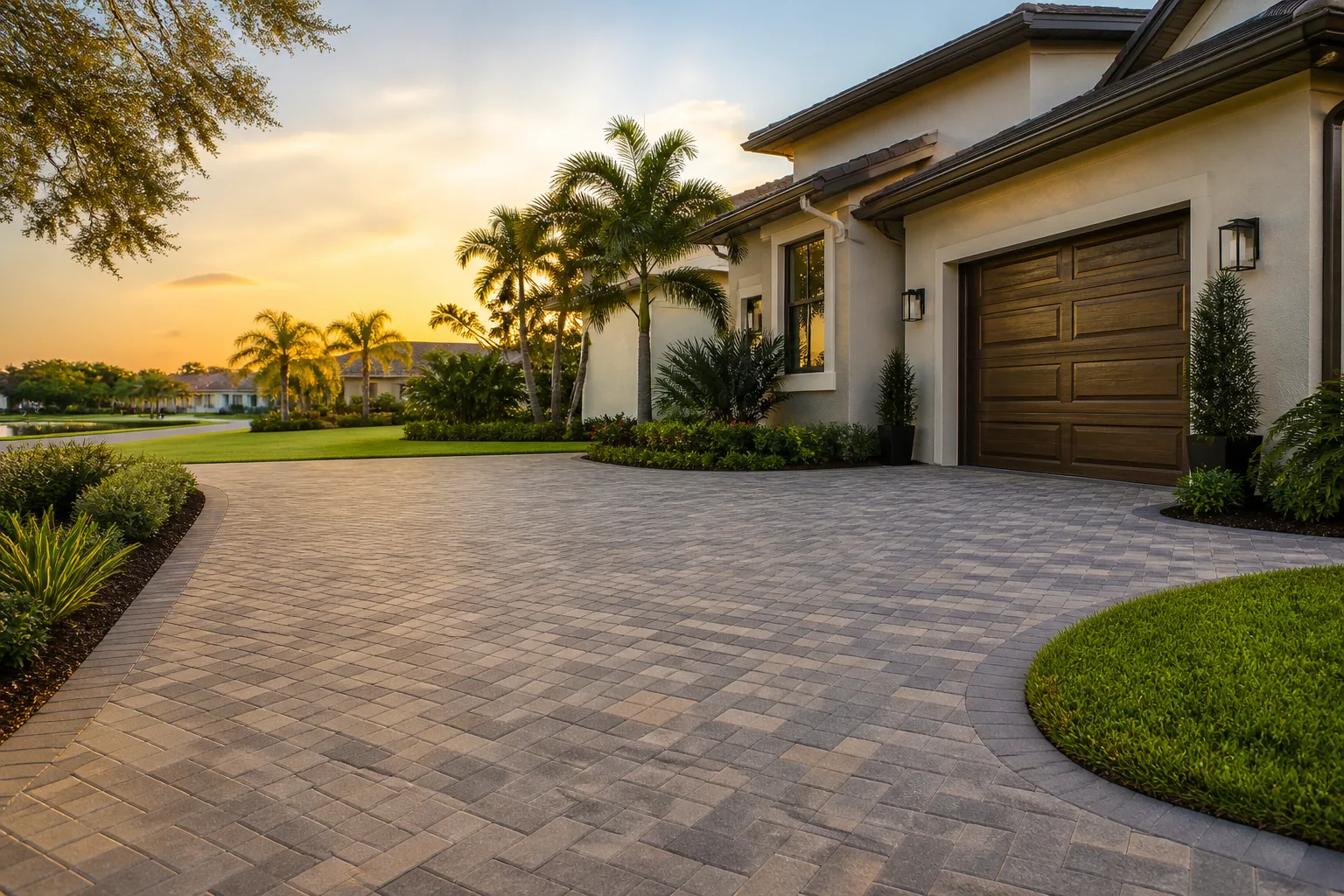
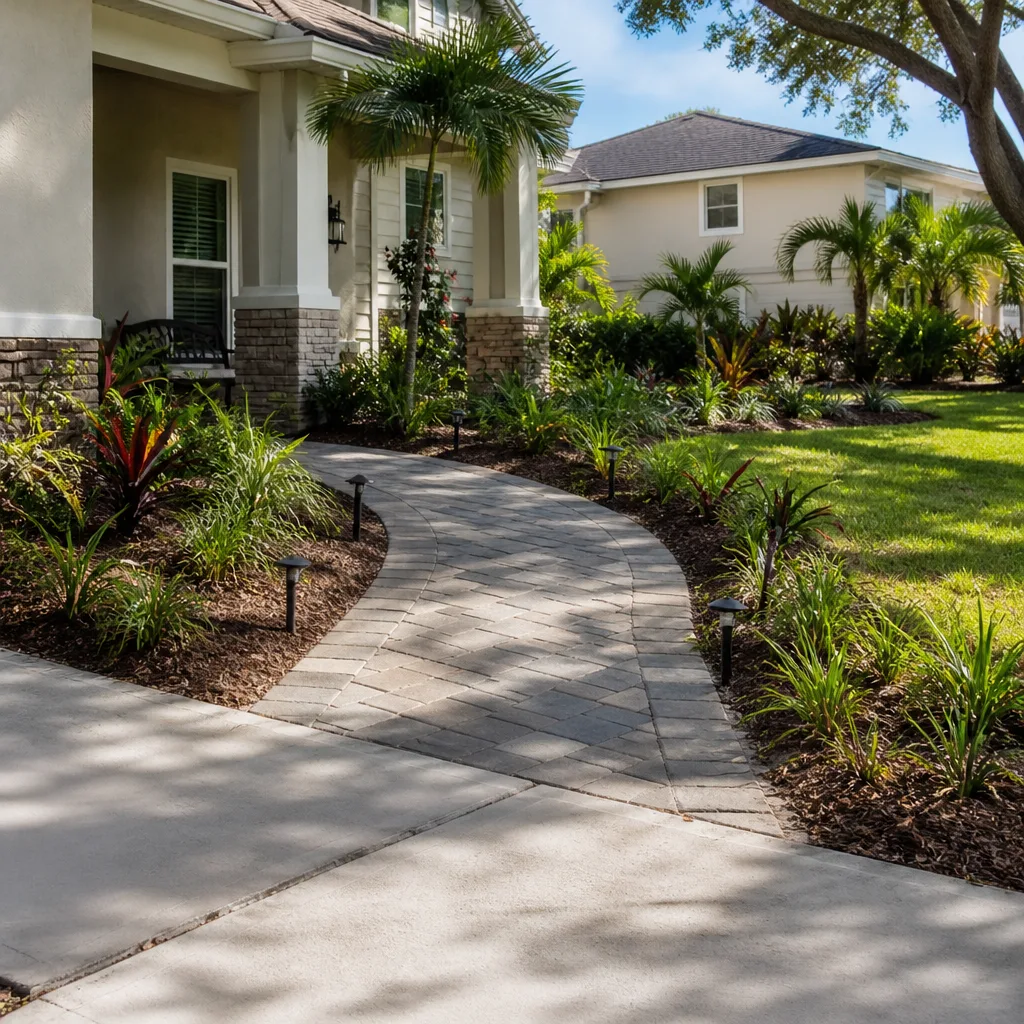
Concrete pavers are the workhorse of the Las Vegas Valley. They’re durable, widely available, and come in enough shapes and colors to satisfy just about any HOA palette. Brands like Belgard, Tremron and Pavestone all make strong product lines for residential driveways. The trade-off is surface temperature. Concrete holds heat, so on a 110°F day a plain concrete paver driveway can get genuinely uncomfortable underfoot. Color choice matters more than people expect here; lighter tones stay measurably cooler than dark ones.
Travertine
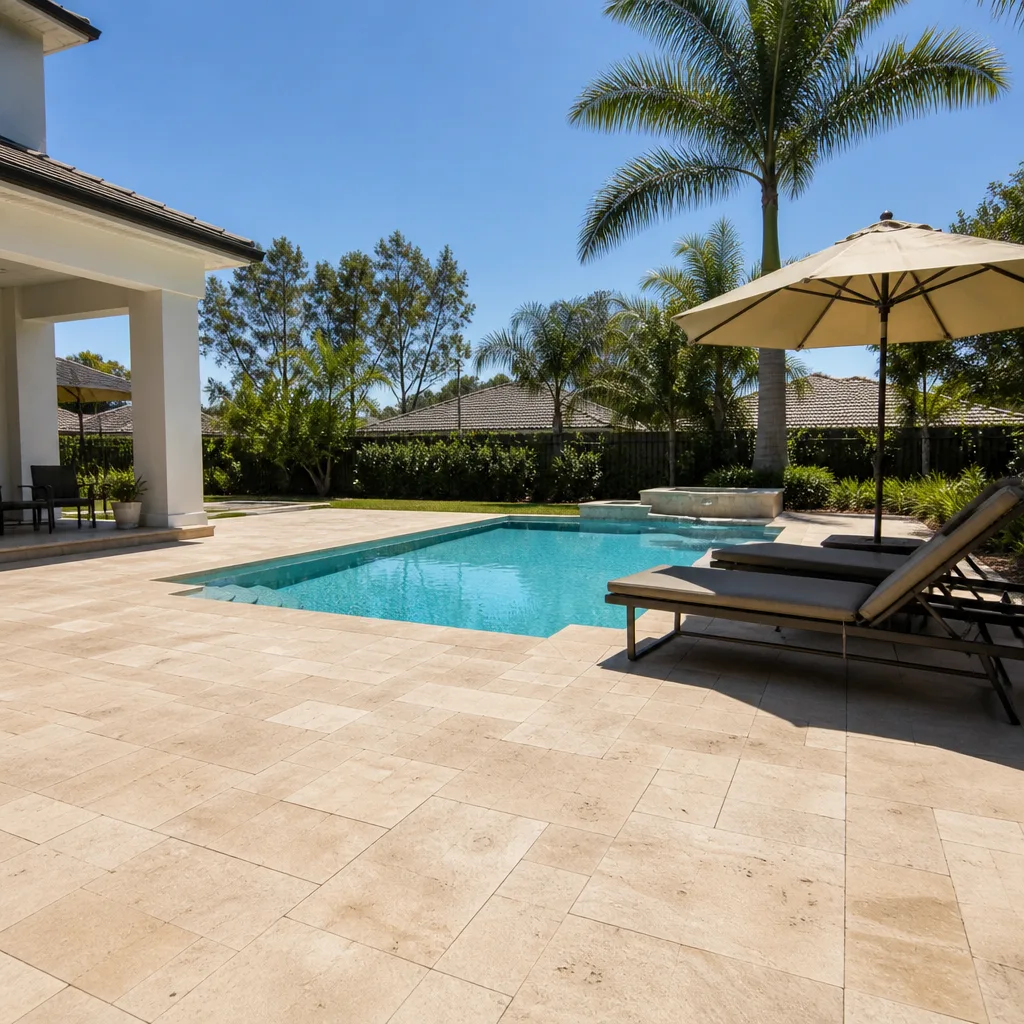
Travertine is a natural stone that stays notably cooler than concrete under direct sun, which is why it shows up on so many pool decks and entry walks in and around Spring Valley. It has a beautiful, warm look and a texture that holds up well. The catch is that travertine is more porous than concrete or porcelain, so it needs sealing and a bit more care, and it’s typically a higher-cost option. For a front walk or a courtyard, it’s hard to beat. For a heavy-traffic driveway, it’s a commitment.
Permeable Pavers
Permeable systems let water pass through the joints and base rather than running off. In a place that gets most of its rain in a handful of intense desert storms, that matters. Permeable pavers reduce standing water, ease the load on storm drainage, and fit well with Clark County’s movement toward managing runoff on-site. They need a properly designed open-graded base to work, which ties right back to the caliche discussion. If the base isn’t right, permeable pavers are just regular pavers with wider gaps.
Porcelain Pavers
Porcelain pavers hold color better than anything else on this list and resist staining and freeze-thaw movement well. They’re dense and precise, with a very consistent look. They’re also at the top of the price range and can feel a touch harder underfoot than natural stone. If longevity and color stability are the priority and budget allows, porcelain is a strong choice.
Heat and Reflectance: Why Surface Temperature Matters in a Nevada Summer
Spring Valley summers push past 110°F, and the surface of a driveway can run far hotter than the air. That’s not a small comfort detail. If you walk barefoot to the mailbox, or if kids and dogs use the drive as play space, the difference between a heat-soaking surface and a cooler one is the difference between usable and off-limits for half the year.
Three things affect how hot a paver gets:
- Material. Natural stone like travertine generally runs cooler than standard concrete pavers. Porcelain sits somewhere in between depending on finish.
- Color. Lighter tones reflect more sunlight and stay cooler than dark charcoal or deep brown pavers. A dark paver looks dramatic and absorbs heat accordingly.
- Shade and layout. Trees, covered entries and the orientation of the drive all shift how much sun the surface takes through the day.
You can’t change the sun in Spring Valley, but you can choose a material and a color that make the driveway work with it. If cool-to-the-touch matters to you, that’s a real reason to lean toward travertine or a light-toned porcelain. If you love a dark, rich concrete paver, go ahead, just know what you’re signing up for in July. We talk through this with homeowners before a single paver is ordered, because it’s easier to make the call now than to live with it for years.
Drainage, Slope and Permeable Pavers Under Clark County Rules
Rain in the Las Vegas Valley is rare but intense, and when it comes it tends to arrive all at once. That combination is exactly the kind of event that exposes a poorly drained driveway. Water that can’t move off the surface pools, finds the low spot, and works its way into the base. Paver driveways depend on getting water away from the structure efficiently, and that means slope and drainage are design decisions, not afterthoughts.
Clark County’s approach to stormwater has been shifting toward capturing and managing runoff close to where it falls, which makes on-site drainage more relevant than it used to be. Permeable paver systems fit that direction well, but they only work when they’re built correctly. The key requirements:
- Positive slope away from the house. The drive needs fall so water runs to the street or a designed low point, never back against the garage or foundation.
- An open-graded base for permeable systems. Water needs a clear path through the aggregate and into the soil below.
- Consideration of the caliche layer. If caliche sits near the surface, water may not soak in as fast, so the drainage design has to account for the real soil, not an ideal one.
- Edge restraint that doesn’t block the flow. Some permeable designs need open joints at the perimeter to let water escape.
This is one of those areas where “it depends on your lot” is the honest answer, and where a proper evaluation pays off. When we plan Construction Spring Valley driveway work, slope and drainage get mapped before materials get picked, because no paver choice can rescue a driveway that sheds water the wrong way.
HOA Palettes and the Brands That Fit Them
Many of Spring Valley’s master-planned communities come with HOA rules on driveway color and material, and those rules shape what you can actually install. Some HOAs want a specific palette of earth tones, some restrict material type, and some want the new driveway to match the neighborhood’s established look. Ignoring the rules doesn’t just risk a fine. It can mean tearing out a perfectly good driveway because it wasn’t approved.
The practical solution is to pick your paver from a brand with compliant options rather than falling in love with a color and hoping. Several manufacturers offer SKUs designed to work within common desert-community palettes:
- Belgard offers a broad range of tones and styles that meet many HOA specifications.
- Techo-Bloc carries modern and traditional looks in colors that fit desert communities.
- Pavestone provides practical, widely available options that satisfy typical color requirements.
- Tremron and Unilock round out the catalog with lines built for residential driveways.
Before you commit, pull your HOA’s architectural guidelines and have the exact SKU, color and pattern approved in writing. Then match it to what the manufacturer actually produces. Choose your material, trust our installation, and let the approval process run before the order goes in. If you’re also updating the perimeter, it’s worth planning fence installation in the same conversation so the driveway and fence palette work together rather than fighting each other.
The Full System: Compaction, Edge Restraint and Heat-Rated Sand
A paver driveway is a system, not a surface. The pavers are the part you see, but everything that makes them last is under and around them. Miss one piece and the whole thing suffers. Here’s what a properly built Spring Valley driveway includes.
Sub-base and compaction
The sub-base is the aggregate that replaces the excavated caliche and soil. It has to be the right material, laid in compacted lifts, and each lift has to be watered and compacted to spec before the next one goes on. A single thick layer dumped and rolled once does not do the job. Proper compaction is what stops settling and ruts.
Edge restraint
Edge restraint keeps the field of pavers from spreading outward under traffic and heat. There are different types, and the right one depends on the driveway edge conditions and whether the system is permeable. A driveway without solid edge restraint will start to walk apart at the borders.
Polymeric sand
The sand that fills the joints between pavers locks them together and keeps weeds and water from working their way in. In desert heat, that sand has to be rated for the conditions. Brands like Techniseal and Alliance Gator make polymeric sands built to hold up under intense sun and temperature swings. The wrong sand will wash out, crack or fail within a season.
The brands we source pavers and hardscape from, including Belgard, Unilock, Tremron, Techo-Bloc and Cambridge Pavers, come with documented load, fade and freeze-thaw ratings, and pairing them with the right base and restraint is what makes those ratings mean something. Built to spec with brands you recognize, and installed as a system rather than a pile of parts.
How a Proper Paver Driveway Comes Together, Step by Step
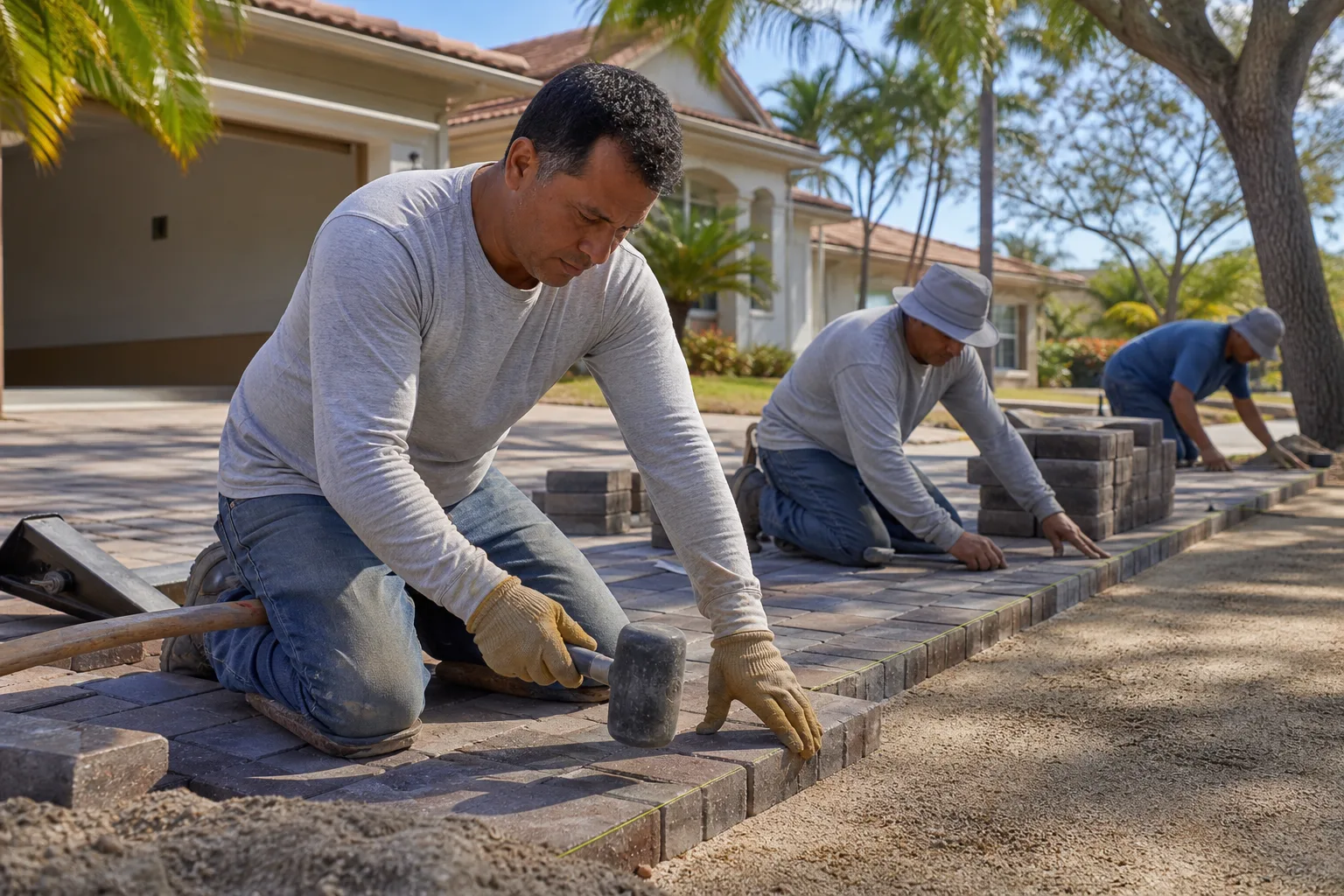
Every solid paver driveway in Spring Valley follows the same basic sequence. The details change with the lot, but the order doesn’t. Here’s how it typically goes:
- Site evaluation and layout. We check slope, drainage direction, soil and caliche depth, and confirm the material and HOA approval.
- Demolition and excavation. The old surface comes out, and excavation goes deep enough to clear caliche and make room for the full base.
- Sub-base installation. Aggregate goes in compacted lifts, watered and compacted to spec.
- Edge restraint set. The perimeter goes in to hold the field in place.
- Bedding layer and pavers. A thin, screeded bedding layer supports the pavers, which are laid to the approved pattern.
- Cutting and fitting. Edge cuts and detail work are done for a clean finish at borders and around fixtures.
- Polymeric sand. Joints are filled with a heat-rated polymeric sand and set according to the manufacturer’s instructions.
- Final compaction and cleanup. The field is compacted and the site cleaned up, with the written estimate governing the finished price.
When the whole job is one contract with one team, the sequence stays clean. That’s the advantage of home additions & ADU and exterior work under the same roof as your driveway: the site, the materials and the timing all get planned together instead of left for separate contractors to argue over.
What Drives Cost on a Spring Valley Paver Driveway
Paver driveway pricing in Spring Valley depends on more than the paver itself. Excavation depth, base thickness, drainage corrections, material choice and edge details all move the number. Because every lot is different, a written line-item estimate is the only honest way to price a driveway, and that estimate sets the final price.
The main cost factors:
- Material. Concrete pavers are typically the most economical, travertine and porcelain sit at the higher end, and permeable systems add base and design complexity.
- Excavation and caliche. Deeper caliche means more removal and more aggregate, which adds cost.
- Base thickness. The thicker the required base, the more material and labor.
- Drainage work. Slopes, grading and permeable design all affect the scope.
- Acreage and layout. Driveway size, curves and cut details all add up.
We don’t publish a single per-square-foot number, because doing so would be misleading on a lot where the caliche sits shallow. What we do is put it in writing, line by line, so you can see exactly where the money goes. Call (844) 560-4461 to schedule a free estimate.
Common Mistakes to Avoid
- Laying pavers over caliche instead of removing it. It saves a step now and costs a rebuild later, because the base can’t drain or settle on that hard layer.
- Skipping HOA approval before ordering. A beautiful paver that violates the community palette can be denied and torn out. Get it in writing first.
- Ignoring slope and drainage. A driveway that sheds water toward the garage is a problem that shows up the first heavy storm.
- Using the wrong polymeric sand. Desert heat and temperature swings punish sand that isn’t rated for the conditions. Use a heat-rated product from a brand like Techniseal or Alliance Gator.
- Compacting the base in one pass. Base has to go in lifts, each watered and compacted. One thick layer rolled once won’t hold.
- Choosing color without thinking about heat. A dark paver in a Spring Valley summer runs hotter than a light one. Pick with July in mind.
- Thinking permeable pavers are just regular pavers with gaps. They need an open-graded base designed for the soil, or they don’t work.
See the difference
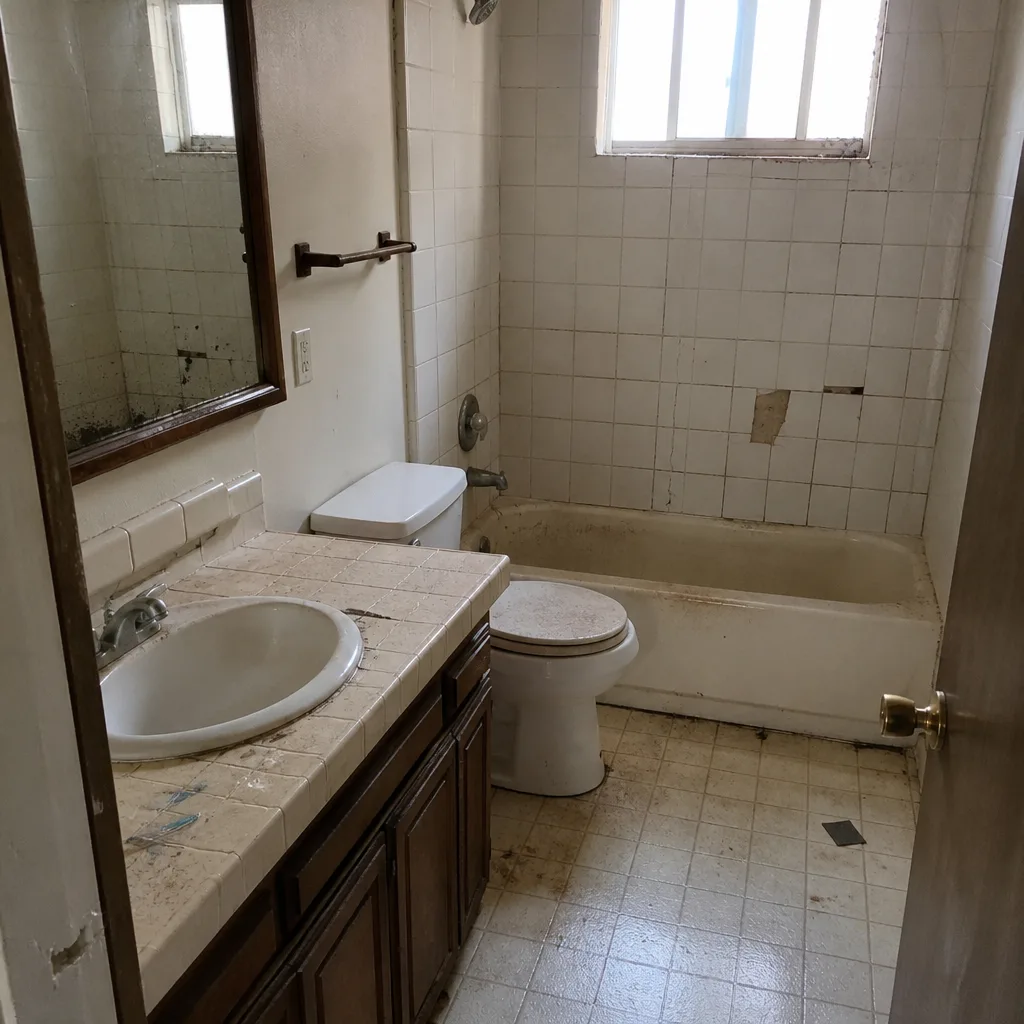 Before
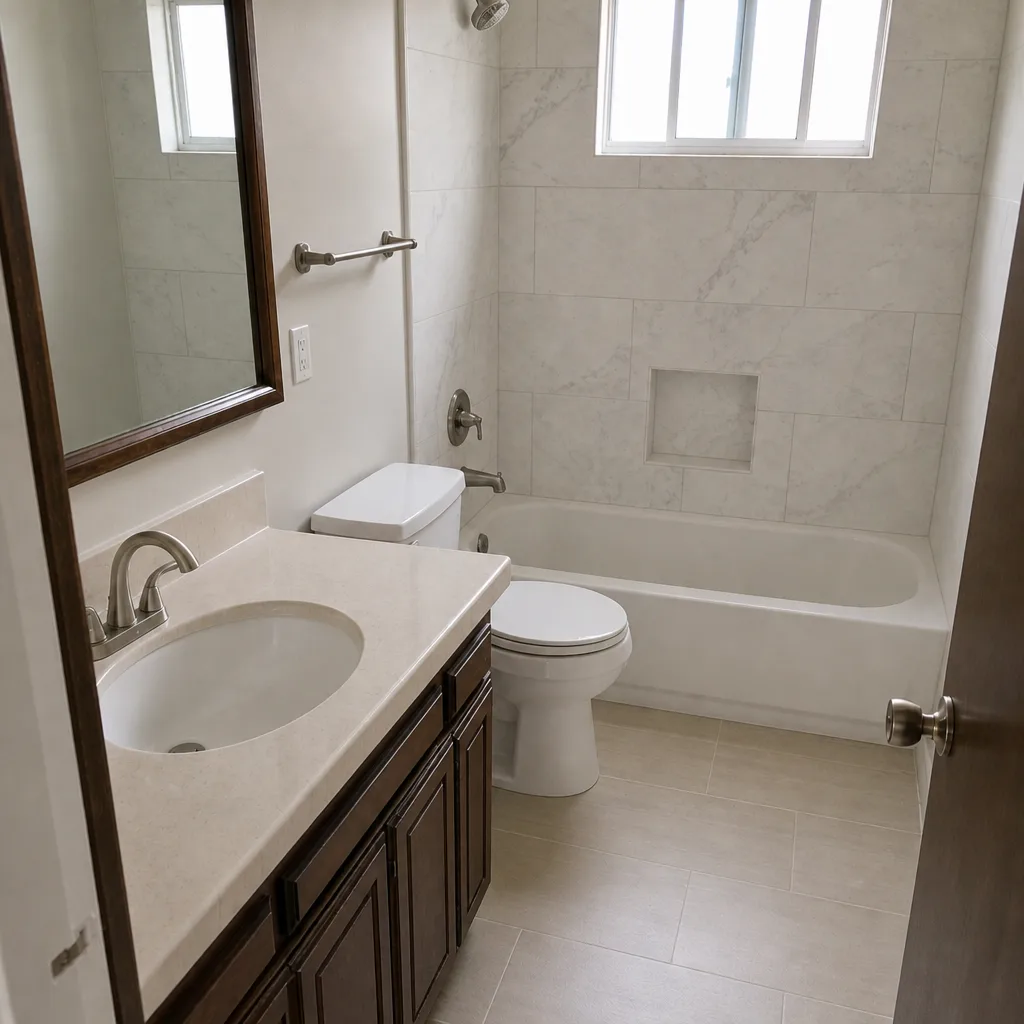 After
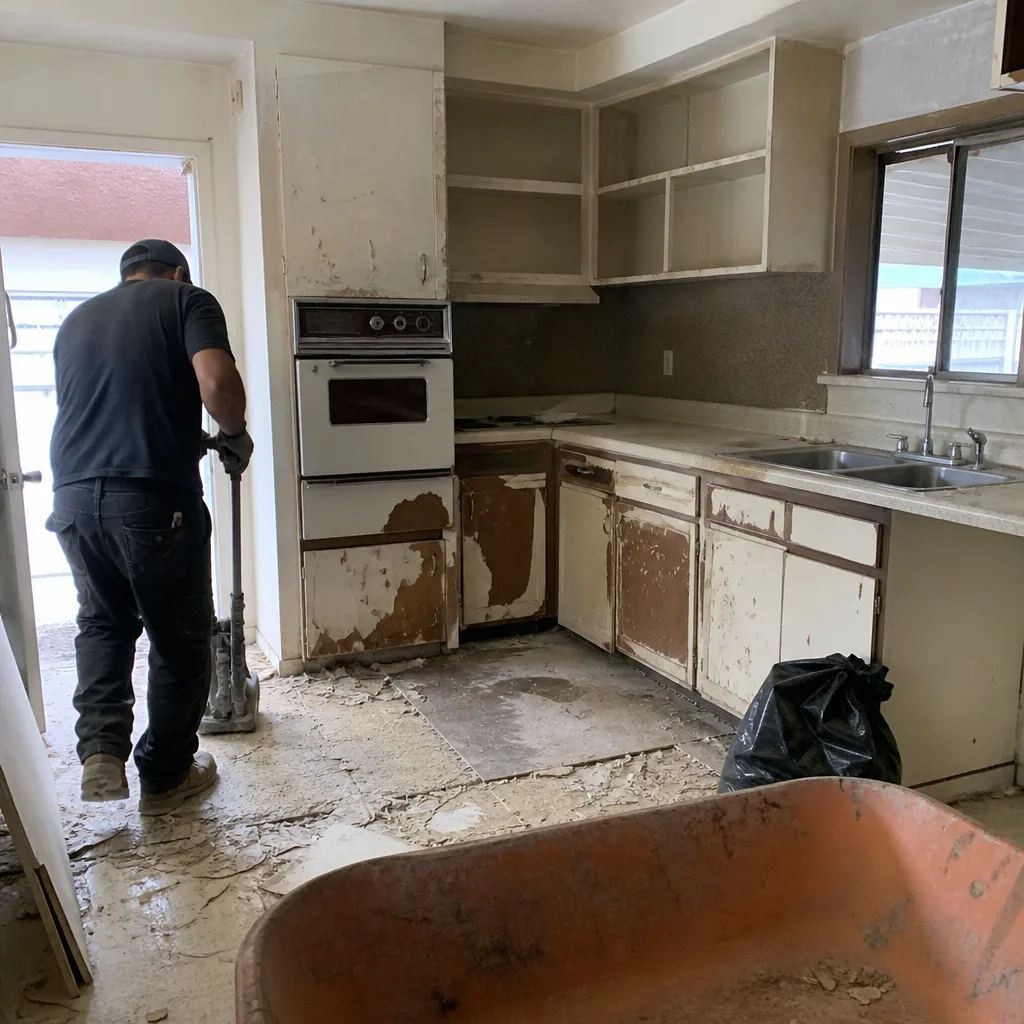 Before
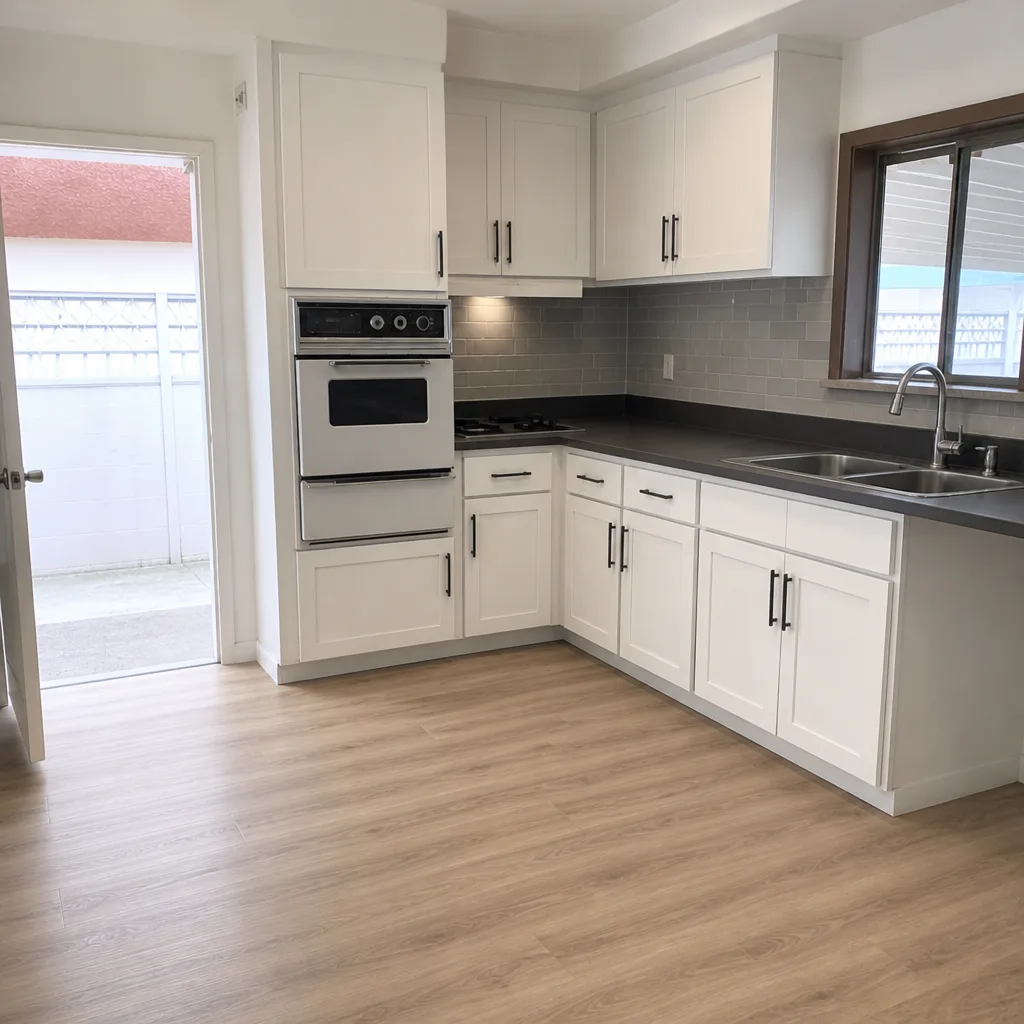 After
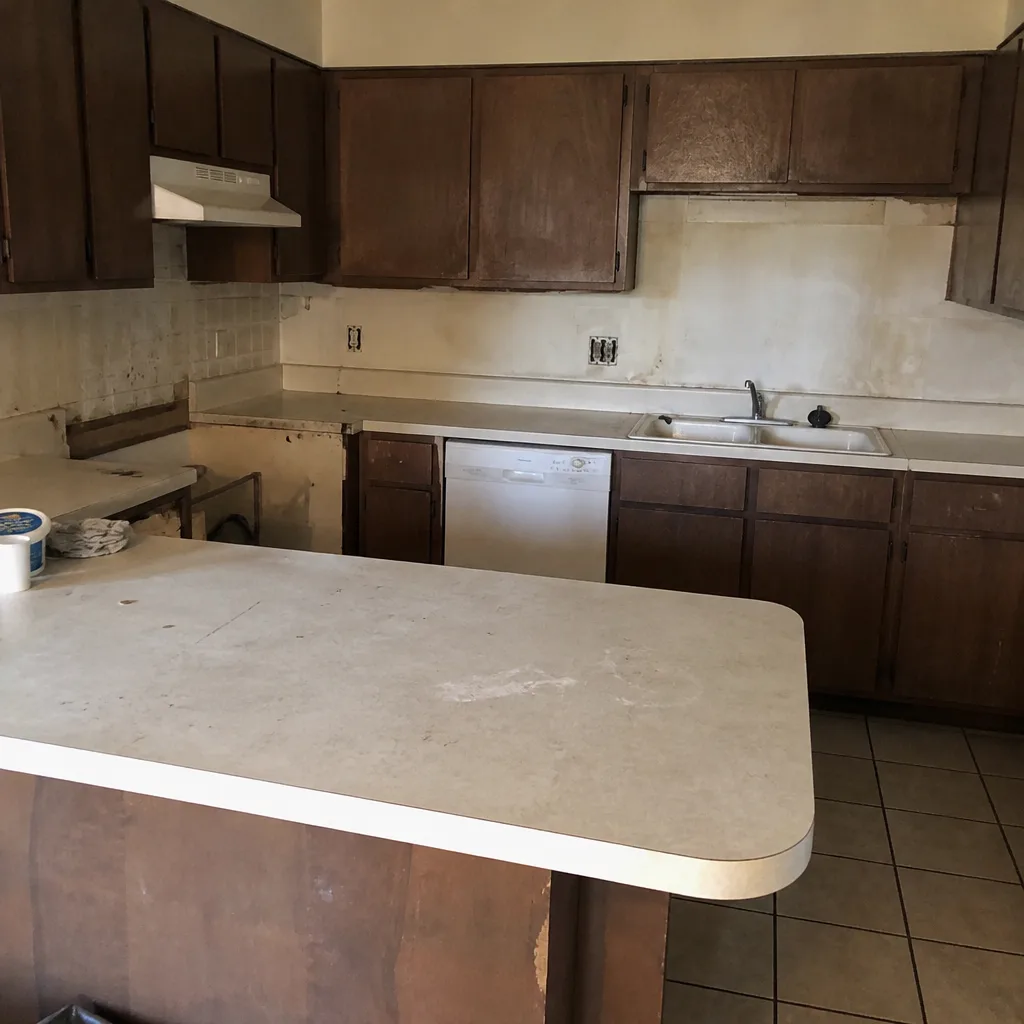 Before
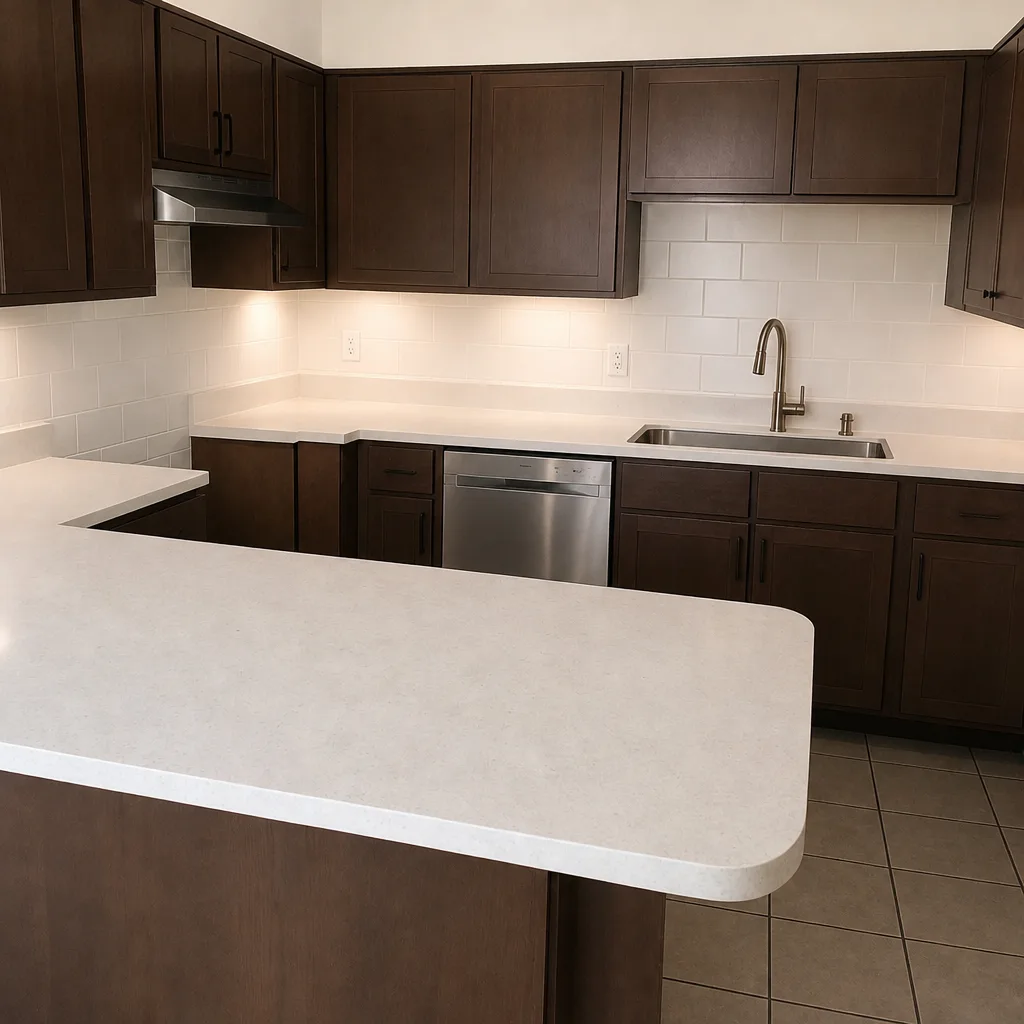 After
When to Call a Professional
Some paver work is fine to plan around, but a full driveway build is not a weekend project, and desert ground makes it less forgiving than most. Call a professional when you’re replacing a failing driveway, when you’re ordering natural stone or permeable systems, when the caliche is shallow and drainage needs design, when your HOA has strict palette rules, or when the driveway needs to tie into a larger exterior plan like siding or a fence. The same goes for any slope that sends water toward the house. Construction Spring Valley offers free estimates in Spring Valley. Call (844) 560-4461. We answer 24/7. Fast dispatch from 7am to 7pm, Sunday through Friday.
Frequently Asked Questions
There’s no single figure because cost depends on your lot, caliche depth, base thickness, material and drainage. The written line-item estimate sets the final price, and it’s free. Call (844) 560-4461 for an exact quote.
In most cases yes, because caliche traps water and won’t settle evenly under a paver field. Leaving it in place is the most common reason a driveway heaves within a few years. A proper evaluation of your lot confirms the right approach.
Travertine generally runs cooler than concrete pavers under direct sun, and lighter tones stay cooler than dark ones in any material. Porcelain sits in between depending on finish. Choose with July afternoons in mind.
No. The written estimate sets the price, and once the scope is agreed the number doesn’t move. That’s why excavation and caliche are evaluated up front rather than discovered mid-job.
We handle permits where the work requires them and help you get HOA palette approval in writing before materials are ordered. For most Spring Valley driveways, the HOA approval is as important as the permit, so we treat it that way.
Most residential driveways run several days, depending on size, excavation depth and drainage work. A simple driveway is faster than one with permeable base and slope corrections. Your estimate includes the expected timeline.
The Bottom Line
A paver driveway in Spring Valley succeeds or fails on the base long before the pavers ever matter. Clear the caliche, build a compacted aggregate base, design for slope and drainage, use heat-rated polymeric sand and set solid edge restraint, and your driveway will hold through summer heat and desert storms. Match the material to the job: concrete for value, travertine for cooler feet, permeable for drainage, porcelain for color life. Confirm your HOA palette in writing before you order. Choose your material, trust our installation, and get it in writing. That’s the whole guide in one breath.
Ready to plan your driveway? Call Construction Spring Valley at (844) 560-4461 for a free estimate. We answer 24/7. Fast dispatch from 7am to 7pm, Sunday through Friday.
Written by the team at Construction Spring Valley.