
Last updated November 18, 2026







Free written scope consultation - allowances, timeline, and change-order rules on paper before a single trade is scheduled
Construction Warning Signs: A Spring Valley Homeowner’s Reference Guide
Most of the construction problems we get called about in Spring Valley didn’t start as problems. They started as a crack, a stain, a sticking door, or a patch of white powder on a block wall – small things that looked cosmetic and got ignored for a year or two. Then the crack kept spreading, the stain kept growing, or the door stopped closing altogether, and the fix went from a tube of sealant to a foundation conversation. Here’s the point this whole guide is built on: in Spring Valley’s expansive clay soil and sun-baked climate, visible symptoms almost always map to a cause that lives somewhere else. This reference walks you through the signs, what each one actually indicates, and when a symptom is telling you the system underneath needs attention.
Quick Answer
Warning signs on a Spring Valley home are worth investigating when they are recurring or progressing rather than one-time: diagonal stucco cracks wider than a hairline that keep returning after patching, ceiling stains that grow after rain, doors and windows that bind in one season and free up in another, or ponding water on a flat roof that lasts more than 48 hours. Cracks under roughly 1/16 inch that appear once and don’t change are usually cosmetic shrinkage; anything that grows, moves, or comes back after a repair points to a system problem underneath that the surface fix won’t solve.
Styles & brands we work with
- Kitchen remodeling
- Bathroom remodeling
- Home additions & ADU
- Roofing
- Windows & doors
- Driveway & pavers
- Fence
Table of Contents
- How to Read a Stucco Crack in Spring Valley Homes
- What Efflorescence Really Tells You About Moisture
- Flat and Low-Slope Roof Warning Signs
- Ceiling Stains: Roof vs. HVAC vs. Plumbing
- Foundation Signs in Caliche-Rich Soil
- Doors, Windows, and Sticking Patterns
- Drainage, Grading, and Slope Failures
- When a Symptom Means You Need an Assessment
How to Read a Stucco Crack in Spring Valley Homes
Stucco cracks in Spring Valley are extremely common, and that’s exactly why they get dismissed. The problem is that two cracks that look almost identical up close can mean completely different things. A shrinkage crack and a movement crack both show up on the exterior wall, but they behave differently over time, and that behavior is the single best clue you have.
Cosmetic shrinkage cracks are what you get as cement stucco cures and dries. They tend to be short, random in direction, often map-shaped or spiderwebbed in a grid pattern, and they usually appear in the first year or two after the stucco goes on. They don’t grow. When you patch them, they don’t come back. Movement cracks are a different animal. They are typically diagonal, they run from the corner of an opening – a window corner, a door frame, a corner of the wall – and they tend to grow wider at one end. They come back after patching. In our experience, the location and the pattern matter far more than the length.
Here’s how we read the three main categories:
- Map cracking or spiderwebbing: usually surface shrinkage, cosmetic. Typically no underlying issue.
- Diagonal cracks from opening corners: usually movement, either from foundation settlement, thermal expansion, or a structural header issue. Worth investigating if it exceeds roughly 1/16 inch or keeps growing.
- Horizontal or vertical step cracks: often a foundation or framing movement indicator. Broader, stepped cracks near the base of the wall deserve a foundation look.
The width threshold matters, but progression matters more. A crack that’s 1/8 inch wide and has been that way for years without changing is different from a crack that was a hairline two years ago and is 1/8 inch today. Measure it with a coin or a piece of paper, write the date on the wall next to it with pencil, and re-check in a month. If it’s moved, you have your answer. Spring Valley’s soil moves with moisture, and the pattern of movement follows the seasons here.
What Efflorescence Really Tells You About Moisture
White, powdery residue on a block wall, a paver surface, or the base of a stucco wall is called efflorescence. It’s salt. When water moves through masonry or concrete, it dissolves naturally occurring salts inside the material, carries them to the surface, and evaporates, leaving the salt behind as a white bloom. So efflorescence is a moisture indicator, but not automatically a moisture problem. That distinction saves a lot of homeowners from unnecessary panic.
The key question is what’s driving the water. Fresh masonry effloresces as it cures, which is completely normal and fades. Pavers installed over a properly compacted base can show light efflorescence after the first wet season as the base settles. That kind is cosmetic; it washes off with a diluted white vinegar solution and re-sealing once the material is fully dry discourages it from coming back.
The case that gets our attention is recurring efflorescence in a specific, concentrated zone – the bottom course of a block wall, the base of a stucco band, or a repeating pattern along a paver edge. When the bloom keeps returning to the same area after cleaning, the water source is persistent, and there are usually three candidates:
- Failed flashing or a missing weep path where water enters at the top and travels down inside the wall
- Poor grading or a planter bed pushed too high against the wall, forcing water into the masonry above the damp course
- A plumbing or irrigation leak that has been slowly saturating the base of the wall
It’s worth investigating when the bloom is recurring, concentrated, and accompanied by a soft, chalky, or disintegrating texture on the block face itself. Bubbling paint, a spongy feel under fingertip pressure, or darkened base courses are the next level of warning. That’s when you want a professional to trace where the water is coming in rather than just clean the surface. Sourcing block or paver material from brands like Belgard or Tremron, which publish documented absorption and freeze-thaw ratings, gives you a known baseline; local block that has been sitting on a jobsite absorbs differently.
Flat and Low-Slope Roof Warning Signs
A lot of Spring Valley homes have flat or very low-slope roofs over additions, patios, garages, and second-story sections, and those roofs fail in ways that are genuinely different from pitched shingle roofs. Because there’s no gravity-driven shedding, water sits until it drains or evaporates, and that makes slope, membrane integrity, and flashing far more critical. Three specific signs are worth knowing.
Ponding water that stays more than 48 hours. Some ponding on a flat roof is normal after a storm; water lingering more than two days after the rain stops is not. The cause is almost always a low spot in the deck, a drain that isn’t at the true low point, or a settled area over a structural member. Persistent ponding accelerates membrane aging and eventually forces water laterally into seams. If your roof holds water through a Spring Valley summer with no rain at all, that suggests a slow deck deflection or trapped moisture under the membrane. That needs eyes on it.
Membrane bubbling or fishmouthing. Blisters and bubbles indicate that moisture got trapped under the membrane or that the adhesive layer failed. On a TPO or modified bitumen roof, fishmouthing (membrane edges lifting away from the substrate) tells you the edge detail has already started to open. Small blisters that don’t change are cosmetic; blisters that spread, especially after a hot month, mean the substrate or adhesive system is losing. Spring Valley’s summer heat cycles membranes hard, and adhesive failure is more common than many homeowners realize.
Flashing separation at penetrations and wall junctions. The most expensive leaks start at the flashing around HVAC curbs, skylights, vent stacks, and wall-to-roof transitions. Look for lifting, crazing, or separation in the flashing membrane or in the sealant fillet where the roof meets a wall. For pitched sections, the same rules apply to shingle field and flashing, and if you’re planning a repair or replacement, a GAF, CertainTeed, or Owens Corning system is the standard range worth comparing against. Remember that on any roof surface, real safety matters: use binoculars from the ground, and let trained professionals handle the walk.
Ceiling Stains: Roof vs. HVAC vs. Plumbing
Nearly every homeowner jumps to “roof leak” when they see a stain on the ceiling, and roughly a third of the time, they’re wrong. The three major causes produce stains with distinguishable characteristics, and reading those characteristics correctly saves you from re-diagnosing the wrong system.
Roof leak stains tend to be brown or rust-colored, with a defined edge, often concentric rings that mark the water’s high water mark. They are typically close to an exterior wall or under a roof plane, they grow after rain, and they show active moisture only during or after a storm. Flashing-related leaks start at the edge of a ceiling and spread inward. Above a roofline with a flat section, they show up where ponding has been, in a symmetric pattern along the ceiling below the framing.
HVAC condensation stains are usually pale, tan, or clear-water rings under the air handler or where the condensate line runs. They often appear during cooling season only, and they’re frequently centered under the unit closet or the line’s path. If the stain grows when the AC is running but never during a rainstorm, the drain line or drain pan is the likely culprit.
Plumbing stains show up with a wet spot and no correlation to weather at all. They are usually directly under a bathroom, a kitchen, or a supply line path, and they may show a visible drip or a fresh wet edge that persists.
Here’s a diagnostic order worth running before you call anyone:
- Note whether the stain grows during rain. Yes: roof or flashing.
- Note whether it grows during cooling season. Yes: HVAC condensate.
- Note whether it seems unrelated to weather. Then check under the nearest bathroom or supply riser for a plumbing source.
- None of the above but the stain is spreading. Look at exterior drainage and grading on that side of the house.
If more than one appears plausible, get an assessment from a contractor who handles exterior systems and can rule out a roof source first. A roof leak misdiagnosed as an AC problem can run for years in a Spring Valley home because the AC runs through most of the year.
Foundation Signs in Caliche-Rich Soil
Spring Valley’s soil profile is a house of cards in one specific way: upper soil layers can be expansive clay (swelling when wet, shrinking when dry), and deeper layers are often caliche, a naturally cemented calcium carbonate layer that resists drainage. Water sits above the caliche, soaks the clay above it, and that clay moves. The result is differential settlement, and the visible signs are surprisingly specific to this pattern.
The three signals we watch for most closely in Spring Valley homes:
- Door and window binding. A door that sticks on the hinge side and swings free on the latch side, or a window that binds at one corner and frees at the other, is showing a racking pattern. When the house moves diagonally, the frame opening warps, and the door or window reveals it first.
- Floor tile cracking sequences. Tiles that crack in a line or in a fan pattern, rather than at random spots, follow a subsurface movement line. Isolated random tile cracks usually follow an impact; line-arranged tile cracks follow movement.
- Drywall joint gaps and corner cracks. Cracks at the interior ceiling-wall joint or at a wall corner, especially ones that open and close seasonally, are showing the foundation is moving. Cracks that widen at the top and stay wide are often settlement.
The reason this matters is that we see homeowners patch and paint the interior three or four times before addressing the actual soil. Patching the drywall without addressing drainage or the foundation interface means the crack opens again the next wet-to-dry cycle. Spring Valley sits in an environment that amplifies that cycle: summer heat pulls moisture from the upper clay, and monsoon-season rain puts it back. The foundation moves with the moisture; the drywall records it.
Not all movement is a failure. Tight threshold doors and minor corner cracks in a mature home can be seasonal. The serious signals are progression, cycling patterns (open in one season, close in another), and any pattern that has visibly worsened over two or more years. That’s the point to bring someone in for a foundation assessment rather than a patch.
Doors, Windows, and Sticking Patterns
Sticking doors and windows are the single most useful early-warning indicator in a Spring Valley home because they’re on the interior, they’re cheap to look at, and they respond immediately to what the frame underneath is doing. A window that opens freely in January and binds in July is telling you something specific.
A door or window is set into a rough opening framed into the wall. When the foundation moves or the framing shrinks and swells, that opening warps. The way it warps shows up in how the door or window operates. Sticking on the hinge side, sticking at the top, or feeling a rub on the latch side all correspond to different directions of movement.
There’s also the exterior-to-interior connection. A window that frees up after a repair but binds again by the next season is telling you the frame itself has been re-set, but the source of movement hasn’t been addressed. A window that binds once, then stays free after adjusting, usually just needed adjustment. Sourcing replacement doors and windows from ViewLux or Therma-Tru, when you’re at the point of replacement, gives you published frame and slab tolerances; the installer can set those openings with a known spec instead of guesswork. Window replacement in Spring Valley should always be paired with a look at the surrounding stucco and flashing; a replaced window with a fresh seal still needs the correct opening margins.
Another pattern worth watching: multiple doors and windows binding at the same time on the same side of the house. That’s not a coincidence. It means the wall framing on that side is racking, and the likely cause is differential movement along that foundation line or slab edge. That is a call-a-professional pattern, not a call-a-handyman pattern.
Drainage, Grading, and Slope Failures
We spend a lot of time on warning signs that originate inside the house, but a big share of them start outside. Poor site drainage is the most common root cause of foundation movement, efflorescence, and interior moisture in Spring Valley homes, and it’s also the easiest to identify.
The rule of thumb is that impermeable surfaces and soil should slope away from the foundation at roughly 6 inches of fall over the first 10 feet. That’s simpler to check than it sounds. After a storm, walk the perimeter and look for the pattern of where water sits and where it runs. Standing puddles against the foundation are a warning sign. Roof runoff that lands at the wall instead of a swale or a drain is a warning. Irrigation heads aimed at the wall, planter beds mounded against the stucco, and pavers set with insufficient cross-slope are all contributors. For driveways and hardscape, correct base compaction and slope matter as much as the material; when driveway & pavers slope back toward the garage instead of away, the problem is set at install time.
There’s a second drainage issue that gets talked about less. In Spring Valley, blocked or undersized foundation drain outlets and downhill swales that have filled with soil over the years are common. They’re also easy to miss because the water simply disappears into the ground, but the ground is receiving it against the footings. The fix is usually a regraded swale and a cleared outlet; the sign that you need one is a seasonal pattern of movement or efflorescence on the side of the house where the swale sits.
Grading also connects directly to the fence line and the surrounding lot. Fence posts set in expansive soil can heave over years, and fence installation done with insufficient footing depth and drainage moves more in this soil than it does elsewhere. If your fence is leaning systematically on one side of the yard, check the drainage on that side first; brands like Master Halco, Ameristar, Barrette, and Bufftech all publish footing and post-spacing specs, and those specs need to be matched to what the soil is doing, not just followed blind.
When a Symptom Means You Need an Assessment
We’ve laid out a lot of warning signs, and it’s fair to ask when a sign crosses from “noted” to “get someone out.” Here’s a practical triage.
A sign needs a professional assessment when it’s progressing (measurably worse over a time window), recurring (comes back after a fix), or clustered (more than one symptom showing on the same area of the house at the same time). A single cosmetic crack that doesn’t change for a year and isn’t clustered with anything else usually just needs watching. A progressing crack plus binding doors plus tile cracking on the same side of the house doesn’t – that’s an assessment.
Where an assessment involves a system that touches multiple trades, it’s also where a single-contractor perspective helps. A roof leak that’s actually a grading and flashing issue, or a wall crack that’s actually a foundation-and-drainage issue, gets diagnosed quickly when one team is looking at the whole house. When you’re ready to move from diagnosis to work – an addition, a full exterior upgrade, an ADU – home additions & ADU and other scopes belong under one contract rather than broken across three or four separate trades. The full service range is described at Construction Spring Valley.
Common Mistakes to Avoid
- Patching a movement crack before identifying the movement. Patch it, and if it comes back within a year, you’ve confirmed it’s a movement crack, but you’ve also lost a year and a bag of patch. Measure first, patch later.
- Treating efflorescence as a cleaning problem. The white bloom is the visible part; the water source is the story. Cleaning without finding the moisture path just means re-cleaning every season.
- Confusing HVAC condensation stains with roof leaks. In a climate where AC runs most of the year, a pale stain under the air handler gets mislabeled as a roof problem all the time.
- Ignoring door and window binding because “it still opens.” A door that sticks but still operates is still showing you the frame is moving. It’s the cheapest diagnostic you have on the interior.
- Letting flat roof ponding go unaddressed through the summer. In Spring Valley, standing water on a membrane accelerates seam failure quickly; ponding that lingers more than two days after rain is worth a look.
- Grading a bed or a paver area against the foundation without cross-slope. The lot’s drainage starts at your footing, and a re-graded bed aimed at the wall is a slow foundation issue in disguise.
- Assuming multiple symptoms are coincidences. Three separate issues showing up on the same wall in the same year are almost always one cause, and patching the three symptoms separately costs more than one assessment.
See the difference
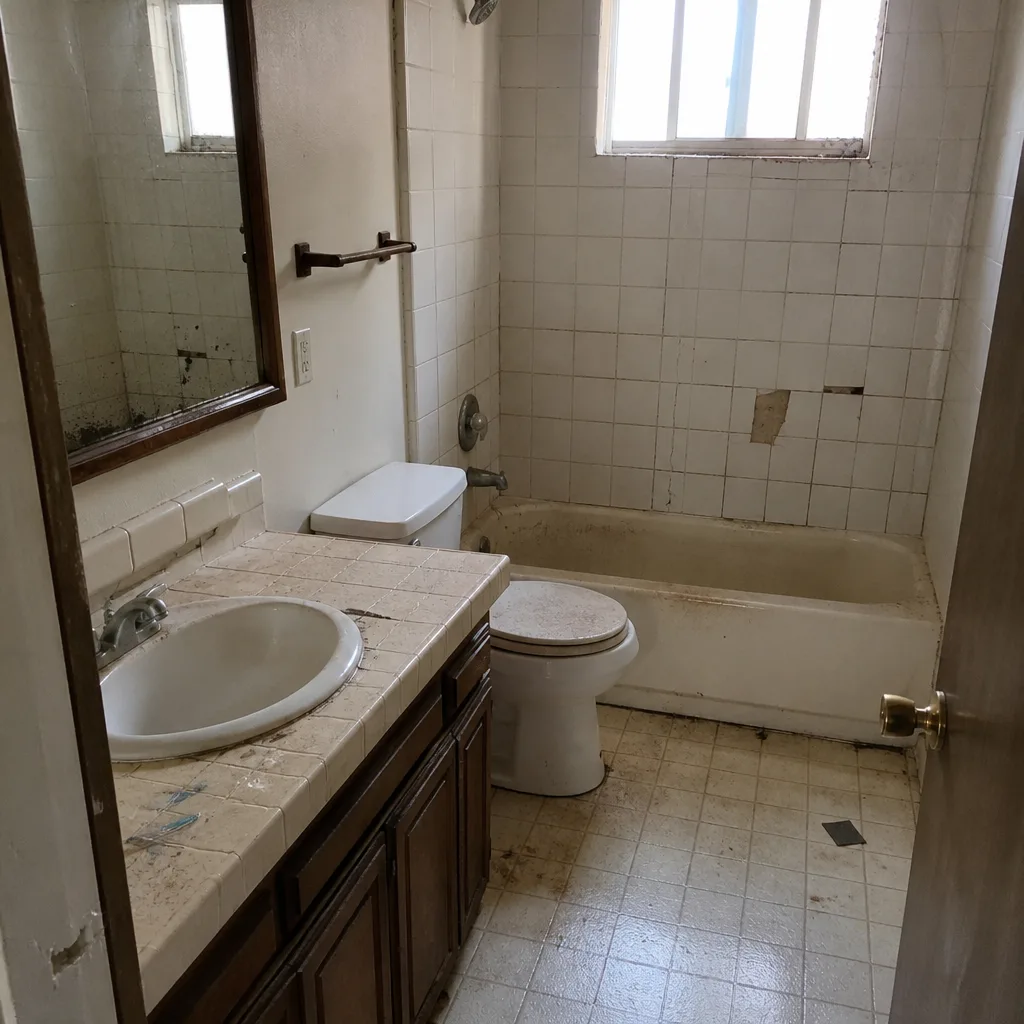 Before
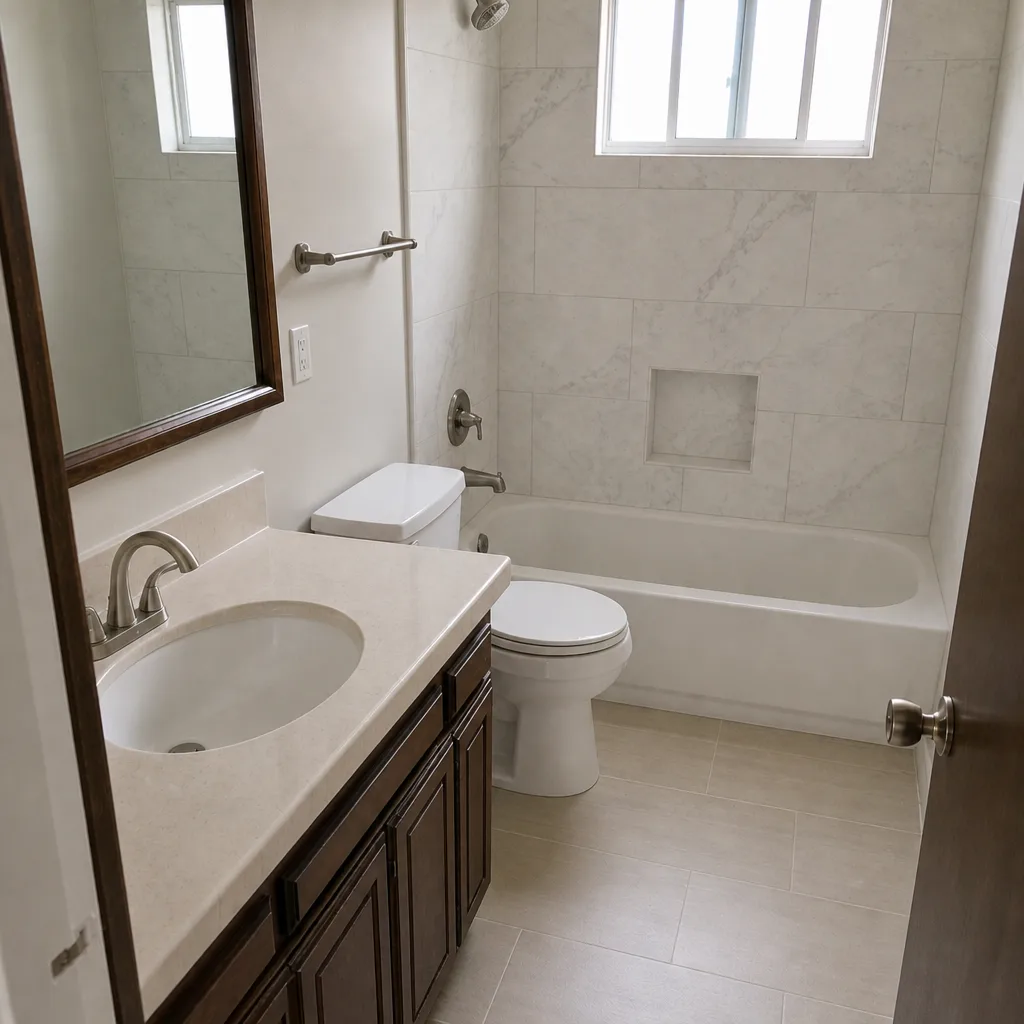 After
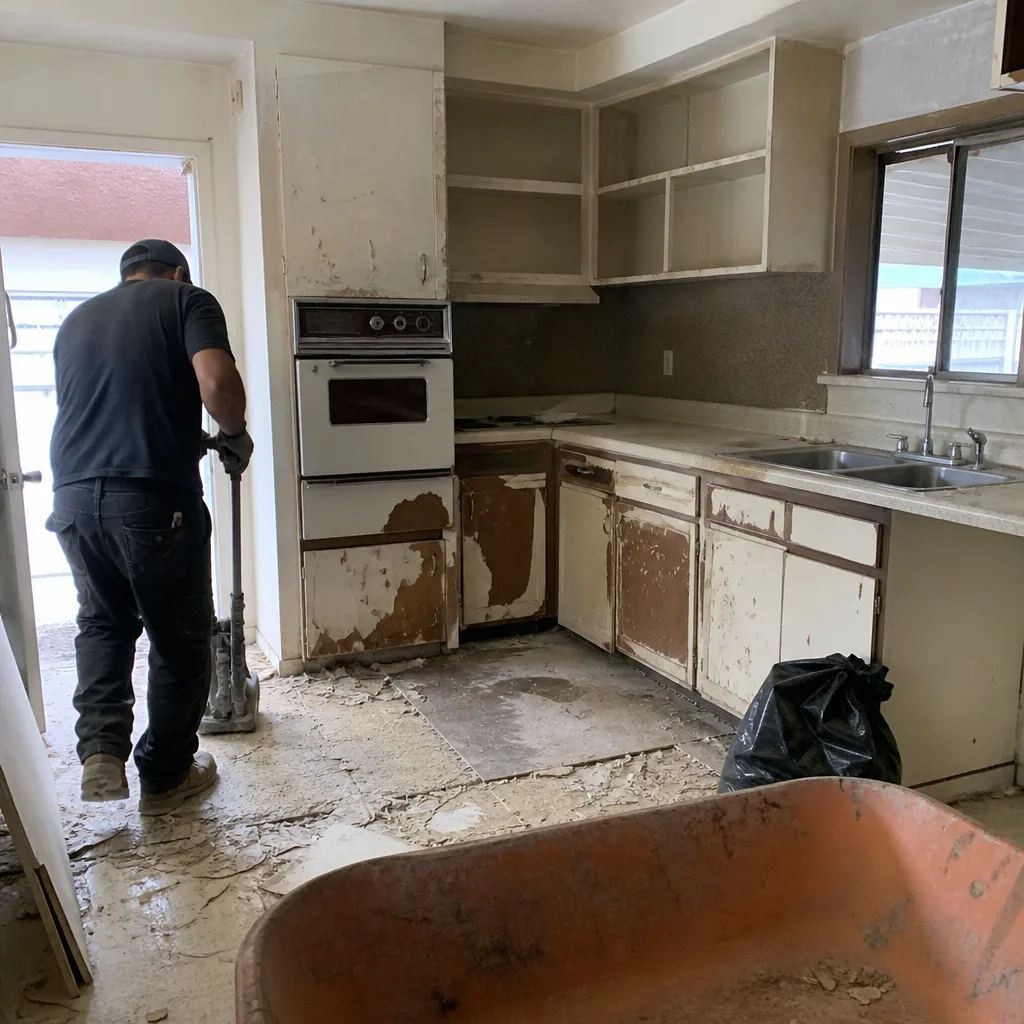 Before
 After
 Before
 After
When to Call a Professional
Call a professional when a warning sign is progressing, recurring, or clustered – not when you first see it. A diagonal stucco crack that grows over two months, a ceiling stain that reappears after the last storm, a flat roof that ponds for more than two days, or binding doors plus tile cracking on the same side of the house are all in “get an assessment” territory. Or when the fix involves areas you aren’t comfortable going onto – roofs especially, where a fall can be far worse than any repair. Construction Spring Valley offers free estimates in Spring Valley – call (844) 560-4461. We answer 24/7. Fast dispatch from 7am to 7pm, Sunday through Friday.
Frequently Asked Questions

Cracks under roughly 1/16 inch that don’t grow are usually cosmetic shrinkage; cracks that are 1/8 inch or wider, diagonal, or recurring after a patch need a professional look. Progression matters more than the initial width. Measure it, date it, and check it again in a month; if it has moved, call (844) 560-4461 for a free estimate.
Not necessarily. Efflorescence is a moisture indicator, not automatically a foundation issue. It becomes a foundation concern only when the bloom is concentrated, recurring in a specific zone, and accompanied by soft or darkened block faces. Call (844) 560-4461 and we’ll help you trace the water source.
Seasonal sticking is a sign the frame is moving with the cycle of soil swelling and shrinking. If it frees up and sticks again every year, that’s a foundation movement pattern, not a door adjustment. Call (844) 560-4461 for an assessment; the diagnosis is worth more than a repeated hardware fix.
Roof leaks grow during or after rain; HVAC leaks grow during cooling season. Brown, ringed stains near an exterior wall point to roof or flashing; pale, clear-edged stains under the air handler point to condensate. Call (844) 560-4461 to rule out the exterior source first.
Water should drain off a flat or low-slope roof within about 48 hours. Ponding that lasts longer, or that sits through dry weather, indicates a low spot or a deflection issue. It’s one of the more serious roof warning signs in Spring Valley and worth a professional look – call (844) 560-4461.
No. Expansive clay response, swale capacity, and lot elevation vary with the local soil and grading history. The three universal indicators – movement, recurrence, and clustering – apply everywhere, but the severity depends on which side of your lot the water is draining toward. That’s why we assess in place, not over the phone. Call (844) 560-4461 for a free estimate.
The Bottom Line
Spring Valley construction warning signs are rarely the dramatic failures homeowners brace for. They show up as a hairline crack, a shoulder-height white bloom on a block wall, a ceiling stain that only grows after rain, a door that binds for a few months, or a low spot on a flat roof. In each case, the surface is the symptom and the cause is underneath: soil movement, drainage, moisture, or a flashing detail. Watch for three things – whether the sign is progressing, whether it recurs after a fix, and whether it’s clustered with others. Those three tell you when to watch and when to call. When it’s time to call, clear the schedule first and let an assessment settle the question.
Call (844) 560-4461 for a free estimate. We answer 24/7. Fast dispatch from 7am to 7pm, Sunday through Friday. Our technicians have up to 12 years of experience, and we work from the driveway to the roofline, so a warning sign inside and outside the house gets looked at by one team – choose your material, trust our installation.
Written by the team at Construction Spring Valley.